Five Types of Belarusian Cities
Tap on the group to find out more about it

Reveals the multifaceted reality of Belarusian cities across five dimensions
Our intention is not to shame the worst cities or praise the best. Instead, the Center for New Ideas seeks to increase public interest in regional problems and foster expert discussion

demographic sustainability
economic situation
quality of life
civil and political practices
tourist attractiveness
In 2023, we doubt that the idea of “the ideal city in Belarus”, around which we made this rating earlier, actually works. In the conditions of ever stronger repressions, economic decline, Belarus' complicity in the Russian war against Ukraine, the concept of “the ideal city” rather turned into “a city where you can move to for a better life, if you don't want to emigrate”. It is painful for us as researchers and for Belarusians, but when evaluating this rating, readers should remember this nuance.
Of course, it is difficult to objectively assess urban development from abroad and under conditions of limited access to data. The situation is further complicated by the war in Ukraine, repression, sanctions, dependence on the Russian economy, migration, and population aging — all of which significantly reshape the country.


Therefore, the “best city” today is rather a city one could move to for a better life, if leaving the country is not an option. For us, it is a place with relatively stable yet dynamic development, where it is easier to build a future: to study, work, and raise children.
Key factors remain the availability of healthcare and social services, the opportunity to earn a decent income, as well as transparency of local authorities and at least minimal influence over their decisions.

When preparing this ranking we drew inspiration from our previous editions, while also looking at examples from neighboring countries and other studies on the development of Belarusian cities and regions. All of these indices address the same fundamental questions as the Ranking of Belarusian Cities, although the Western examples cover more factors and draw from a larger statistical database.
Although such indices reduce the visible scope of information, in practice the ranking contains a wealth of statistical data that determines the ultimate place of each city in it. Below, we provide an explanation of the selection of all indicators across the five dimensions.
Unlike previous years, the dimensions are now weighted differently in the overall score. The State of the economy and Quality of life each account for 30% of the final score, Demographic sustainability for 20%, and Local authorities and Tourist attractiveness for 10% each. We introduced this change to give greater priority to economic conditions and everyday quality of life, as these are the factors that most strongly influence a person’s decision about where to live. While the state of Local authorities and Tourist attractiveness do affect a city’s prospects, they have a less direct impact on residents’ daily lives.
In addition, for the first time we introduced bonus points based on city size. Living in a larger settlement offers more opportunities — more employers, services, and infrastructure — which are not always fully captured by statistics. Therefore, regional capital cities — oblast centres (over 300,000 residents) receive +10 points, large cities (100,000–300,000) receive +6, medium-sized cities (50,000–100,000) receive +3, while small towns receive no bonus.
The results of most indicators are equalized on a scale of 0 to 100 points according to the formula
Exceptions to this are the results of the expert ranking of Belarusian tourist sites and the indicators in the “Civil and political practices” dimension. There, the results are presented according to a three- (0-50-100) and four-step scale:
Please take a look at the following example of how the scale works:

In some cases, winsorization was also applied — a method of limiting extreme values in statistical data to reduce their impact on the overall result.
A particular challenge in compiling the ranking of Belarusian cities was the administrative status of about half of them — they are classified as district-level cities (rather than regional-level cities). As a result, some data for these cities are collected at the district level rather than the city level. We carefully considered how to compensate for this limitation, but in practice, manual data adjustments could reduce the transparency of the study. Therefore, we simply include a note whenever district-level data are used, so that this can be taken into account when interpreting the ranking results.
Work on this Ranking was not easy. This is likely one of the defining features of the time in which we — and our cities — live. With each passing year, the amount of data available for analytical work continues to decline, and finding suitable substitutes in such a turbulent and complex period is far from straightforward.
In the course of preparing the Ranking, we had to abandon certain criteria (for example, data on natural population growth are no longer published, and data from the “Holas” platform are no longer relevant), while other indicators were added. We introduced new parameters related to the comfort of living in cities, and also analyzed the number of women in local government bodies, as well as the presence of executive committees on social media. Despite these efforts, we were unable to find a reliable way to assess some particularly sensitive aspects of urban life — such as environmental conditions, cultural life, and intra-social dynamics.

At the same time, cities remain the primary centers of human capital, economic activity, and social change in Belarus. Therefore, even under conditions of significant uncertainty, it remains important to monitor their dynamics and to identify key trends in a timely manner.
1. The West is strengthening, the East is weakening
The divide between western and eastern cities continues to deepen. Hrodna has surpassed Mahilioŭ in population and moved into third place in the country. Brest has become No. 2 in the ranking, while Homiel — the second-largest city — has fallen to ninth position. Western regional centers are strengthening their positions thanks to tourism, more dynamic demographics, and proximity to the European Union border. In contrast, problems are accumulating in the east: population outflow, weak economic performance, and dependence on a single industry.
2. Cities are shrinking and aging
Only 4 out of 40 cities — Minsk, Hrodna, Brest, and Smaliavičy — have recorded population growth. All the others are losing residents, in some cases by 2–3% over four years. At the same time, cities are aging rapidly: young people are moving to larger centers, and in 15 cities the share of elderly residents has increased by more than 5 percentage points. The exception is Smalyavichy, where the average age is decreasing due to an influx of young families.
3. Industrial cities have diverged
Mazyr and Salihorsk maintain strong positions in the top ten. However, Navapolack, Svetlahorsk, and Babrujsk — also reliant on industry — have declined, affected by sanctions, shrinking markets, and a lack of diversification. Dependence on a single enterprise or sector, once an advantage, has now turned into a risk.

4. Proximity to Minsk no longer guarantees growth
Dziaržynsk remains in 12th place thanks to a strong economy, but Maladziečna, Barysaŭ, and Žodzina — cities that until recently were considered “dynamic satellites” of the capital — have dropped into the lower half of the ranking. The only clear beneficiary of the Minsk agglomeration is Smaliavičy, with population growth of +15%, though even their infrastructure is struggling to keep pace.
5. Local authorities are unevenly visible
Two new indicators reveal a lack of a systematic approach. In recent years, many local authorities have begun developing their presence on social media (12 cities received the highest score), while some remain completely absent from Telegram, Instagram, and other platforms (7 cities fall into this category). The share of women in local councils ranges from 18% to 63%, with no clear correlation to city size or region.
Tap on the group to find out more about it
A comparison of 40 Belarusian cities on sixteen indicators in five dimensions (demographic sustainability, economic situation, quality of life, civil and political practices, tourist attractiveness) allows us to divide them into eight groups.

A well-known independent journalist and civic activist from Gomel. He has participated in training programs on good governance in the United Kingdom (John Smith Trust Fellowship) and Germany (Carl Friedrich Goerdeler Kolleg). At the Center for New Ideas, he served as an expert on regional issues, created the thematic podcast “The common folk”, and contributed to previous editions of the Ranking of Belarusian Cities.
You can contact him via email: merkis@newideas.center

Chair of the Board of the Center for New Ideas. Anton was born in Homel and studied Strategic Communications at King’s College London. He previously managed projects in regional sustainable development, headed the high-tech department at the Minsk Watch Plant, and is a co-owner of a private business. During the 2020 presidential campaign, he was responsible for strategy and communications within the democratic forces’ team.
You can contact him via email at: radniankou@newideas.center
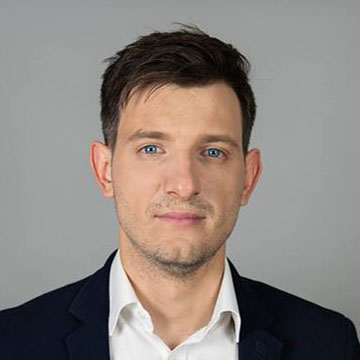
Founder of the Center for New Ideas and Director of the Belarus Initiative at Chatham House. Ryhor is originally from Salihorsk and holds a PhD in Political Science from the University of Warsaw.
You can contact him via email at: astapenia@newideas.center
Everyone else who helped us to produce this Ranking.
